
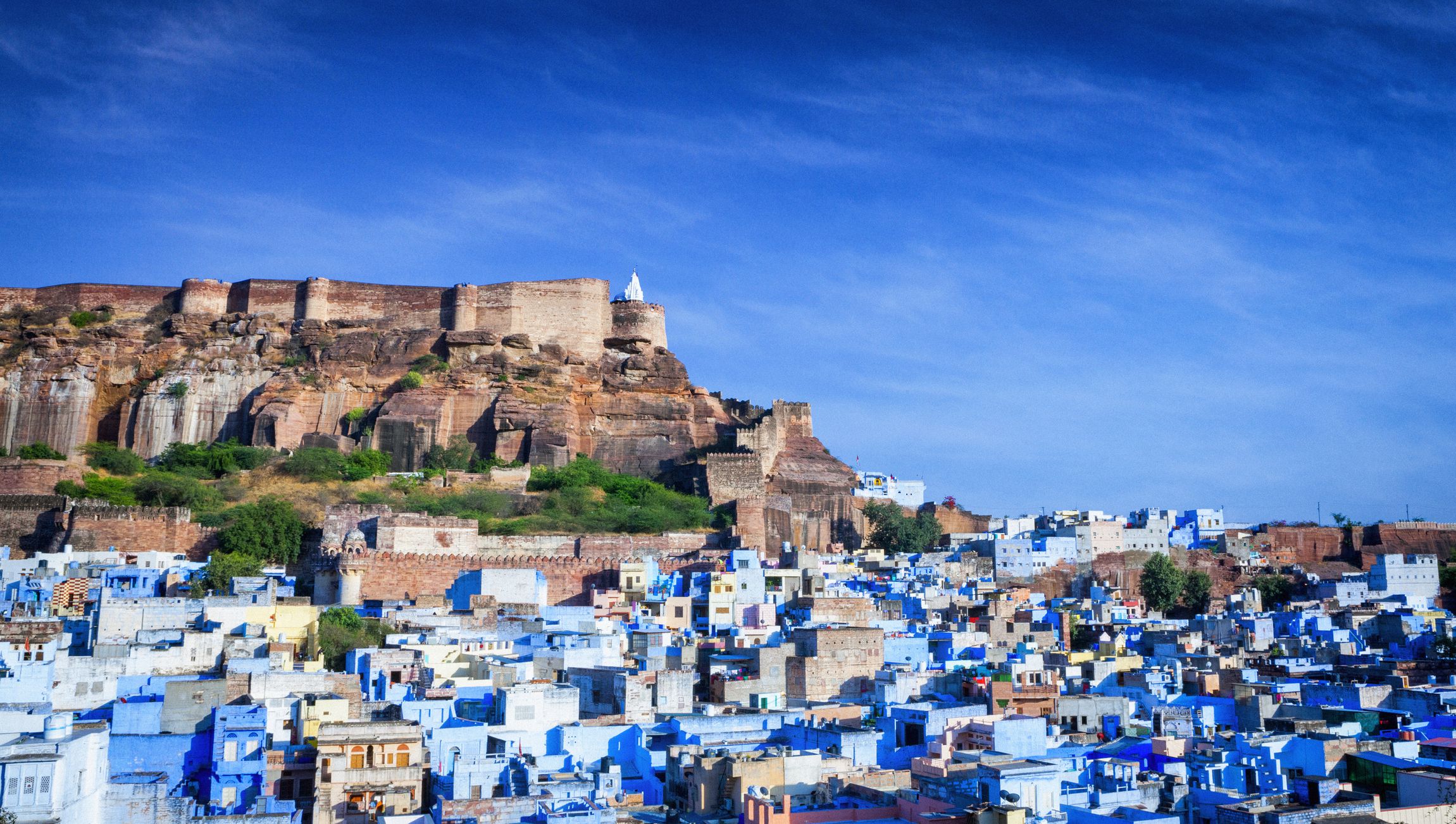
Jodhpur is the second largest city in the Indian state of Rajasthan. It was formerly the seat of a princely state of the same name, the capital of the kingdom known as Marwar. Jodhpur is a popular tourist destination, featuring many palaces, forts and temples, set in the stark landscape of the Thar desert. The city is known as the Sun City for the bright, sunny weather it enjoys all year. It is also referred to as the Blue City due to the blue-painted houses around the Mehrangarh Fort. Jodhpur lies near the geographic center of Rajasthan state, which makes it a convenient base for travel in a region much frequented by tourists. The old city of Jodhpur is surrounded by a thick stone wall. Jodhpur is an historic city and the origin dates to the year 1459 AD when it was founded by Rao Jodha, the Rajput chieftan of the Rathores. The Rathore kingdom was also known as the Marwar and was the largest in Rajputana. The city was built as the new capital of the state of Marwar to replace the ancient capital Mandore, the ruins of which can be seen near what is now the Mandore Gardens. The people of Jodhpur and surrounding areas are hence also commonly called as Marwari’s.
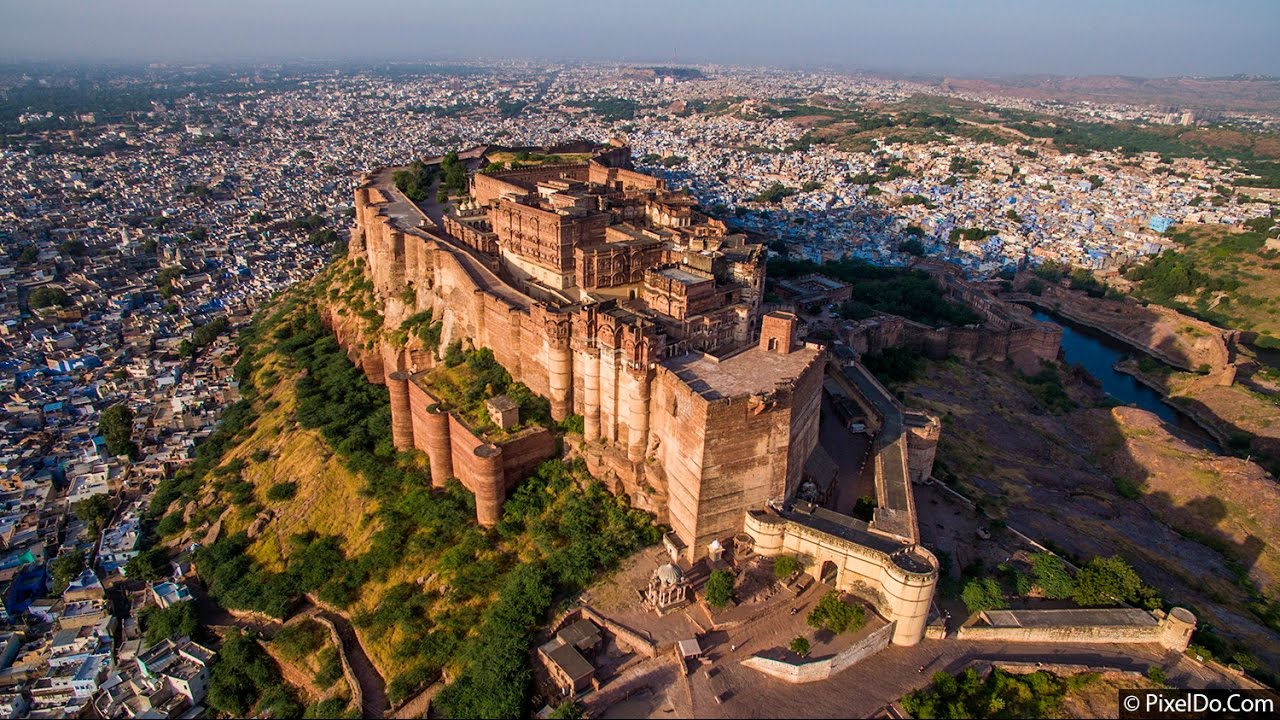
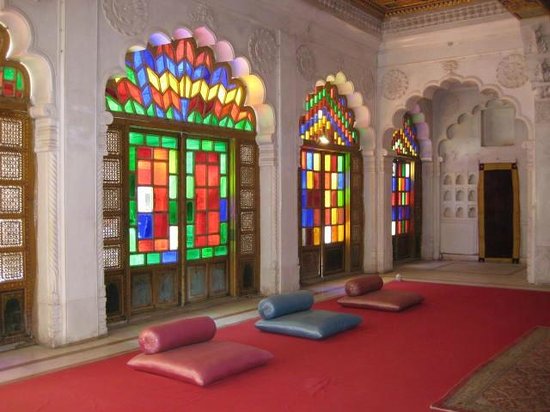
Dominates the city and is the largest fort in all of Rajasthan. Founded in 1458 as the site of Rao Jodha's new capital — hence the name, Jodhpur — the city has grown around it and in the 500 years that have passed the fort has never been taken by force. It's easy to see why: it occupies the entire top of a 150-meter hill with commanding views all around, with some three kilometers of massive ramparts built around the edges. The name "fort" belies the size of the complex, which houses the Maharaja's palace, several temples and, tucked away in the back, an extensive garden still farmed to this day.
1 km downhill from Meherangarh (easily walked). Royal cenotaphs built in marble, with a picturesque location next to a little lake. The Jaswant Thada is a cenotaph located in Jodhpur, in the Indian state of Rajasthan. It was built by Maharaja Sardar Singh of Jodhpur State in 1899 in memory of his father, Maharaja Jaswant Singh II, and serves as the cremation ground for the royal family of Marwar..