Home to the majestic Taj Mahal and two other famous world heritage sites, Fatehpur Sikri and Agra Fort, the city needs no introduction. Its often said that a trip to India is not complete unless you have visited Agra to see the Taj Mahal. Agra is a city on the banks of the river Yamuna in the northern state of Uttar Pradesh, India. With a population of 1,686,976 (2010 est.), it is one of the most populous cities in Uttar Pradesh and the 19th most populous in India. Agra can also refer to the administrative district that has its headquarters in Agra city.
Considered as a UNESCO World Heritage site, being the Taj Mahal and the Agra Fort in the city and Fatehpur Sikri nearby. There are also many other buildings and tombs from Agra’s days of glory as the capital of the Mughal Empire. It achieved fame as the capital of the Mughal emperors from 1526 to 1658 and remains a major tourist destination because of its many splendid Mughal-era buildings, most notably the Tāj Mahal, Agra Fort and Fatehpūr Sikrī, all three of which are UNESCO World Heritage Sites.
The city is mentioned in the Hindu epic Mahabharata where it was called Agrevana, or ‘the border of the forest’. Legend ascribes the founding of the city to Raja Badal Singh (around 1475), who’s fort, Badalgarh, stood on or near the site of the present Fort. However, the 11th century Persian poet Mas’ūd Sa’d Salman writes of a desperate assault on the fortress of Agra, held by the Shāhī King Jayapala, by Sultan Mahmud of Ghazni. Sultan Sikandar Lodī was the first to move his capital from Delhi to Agra in the year 1506, he died in 1517 and his son Ibrahim Lodī remained in power there for nine more years, finally being defeated at the Battle of Panipat in 1526.
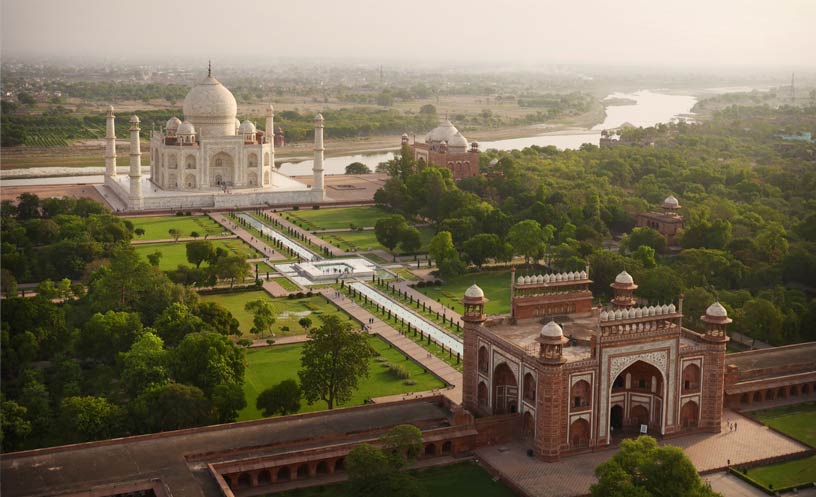
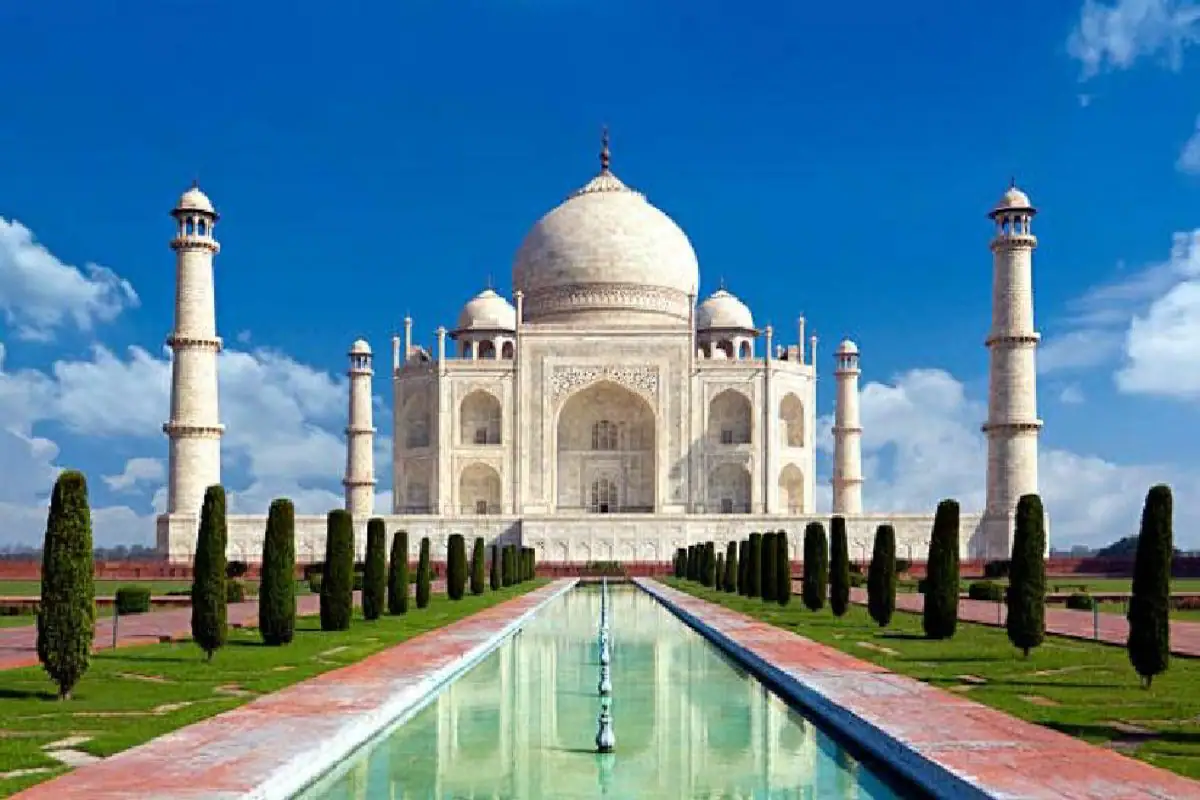
Agra's Taj Mahal is one of the most famous buildings in the world, the mausoleum of Shah Jahan's favorite wife, Mumtaz Mahal. It is one of the new wonders of world, and one of three World heritage sites in Agra. Completed in 1653, the Tāj Mahal was built by the Mughal king Shāh Jahān as the final resting place for his beloved wife, Mumtaz Mahal. Finished in marble, it is perhaps India's most fascinating and beautiful monument. This perfectly symmetrical monument took 22 years (1630–1652) of hard labour and 20,000 workers, masons and jewellers to build and is set amidst landscaped gardens.
Built by the Persian architect, Ustād 'Īsā, the Tāj Mahal is on the bank of the Yamuna River. It can be observed from Agra Fort from where Emperor Shah Jahan gazed at it, for the last eight years of his life, a prisoner of his son Aurangzeb. It is an acknowledged masterpiece of symmetry. Verses of the Koran are inscribed on it and at the top of the gate are twenty-two small domes, signifying the number of years the monument took to build. The Tāj Mahal was built on a marble platform that stands above a sandstone one. The most elegant dome of the Tāj Mahal has a diameter of 60 feet (18 m), and rises to a height of 80 feet (24 m); directly under this dome is the tomb of Mumtaz Mahal. Shah Jahan’s tomb was erected next to hers by his son Aurangzeb.
The interiors are decorated by fine inlay work, incorporating semi-precious stones The Taj is open from 6:00 AM to 6:30 PM (sunset) every day except Friday. It is also utterly stunning under a full moon. You can also get very good views from Mehtab Bagh. It is a good idea to bring a flashlight, because the interior of the Taj Mahal is quite dark (even during the day) and to fully appreciate the details of the gem inlays, you need a good light. Taj Mahal can also be seen during Night 2 days before and 2 days after full moon in all 5 days including full moon. Security is tight and rules and regulations are very important and must be followed at the Taj Mahal. Arms, ammunition, fire, smoking items, tobacco products, liquor, food, chewing gum, knives, wire, mobile charger, electric goods (except video cameras, photography cameras and similar consumer electronic products like MP3 players, iPhones, Smartphones etc and music players) are prohibited inside the Taj Mahal complex.
.
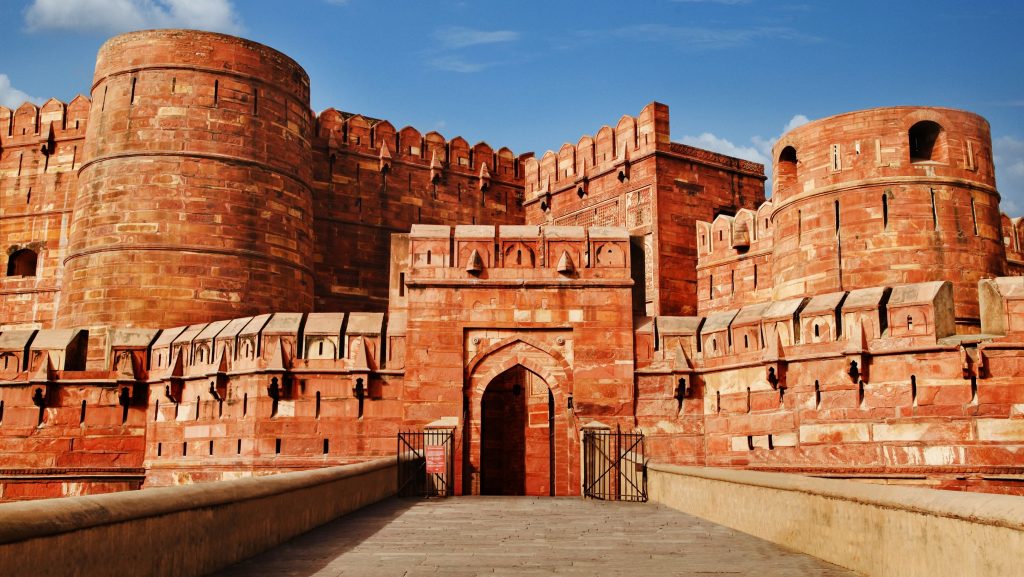
Agra Fort (sometimes called the Red Fort), was commissioned by the great Mughal Emperor Akbar in 1565, and is another of Agra's World Heritage Sites. A stone tablet at the gate of the Fort states that it had been built before 1000 AD but was later renovated by Akbar. The fort is a typical example of Mughal architecture, effectively showing how the North Indian style of fort construction differentiated from that of the South India forts.
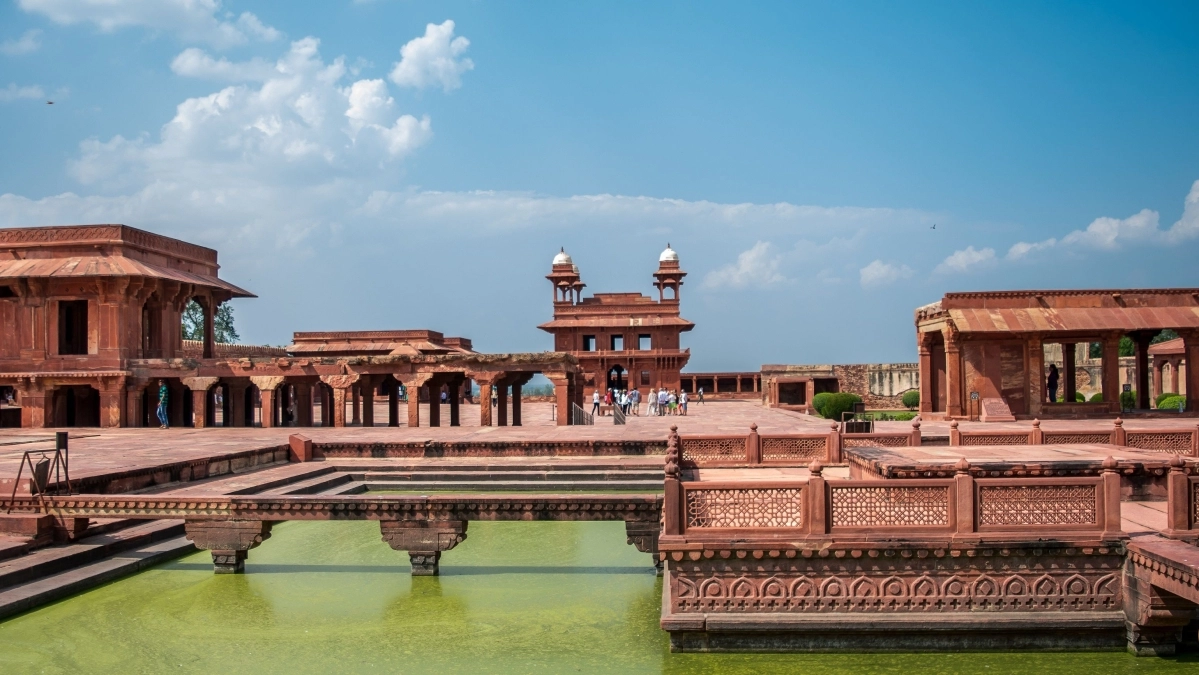
The Mughal Emperor Akbar built Fatehpūr Sikrī about 35 km from Agra, and moved his capital there. Later abandoned, the site displays a number of buildings of significant historical importance. A World Heritage Site, it is often visited by tourists. The name of the place came about after the Mughal Emperor Bābar defeated a in a battle at a place called Sikri (about 40 km from Agra). Then the Mughal Emperor Akbar wanted to make Fatehpūr Sikri his headquarters, so he built a majestic fort; due to shortage of water, however, he had to ultimately move his headquarters to Agra Fort. Fatehpur Sikri (the City of Victory) was the capital of the Mughal Empire for about 10 years. Then it was abandoned for reasons that are still something of a mystery. It includes one of the largest mosques in India, the Jama Masjid. It is full of well-preserved palaces and courtyards, and is a must see for anyone visiting Agra. .