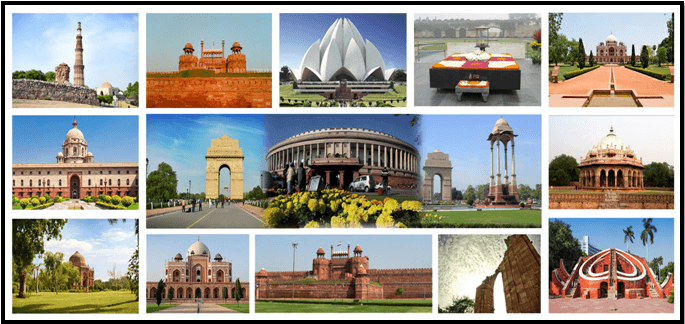
Gateway to north India, Delhi, known locally as Dilli, is the capital of India and its major political and cultural center. Located on the banks of the River Yamuna, Delhi has been continuously inhabited since at least the 6th century BCE. After the rise of the Delhi Sultanate, Delhi emerged as a major political, cultural and commercial city along the trade routes between northwest India and the Gangetic plain. It is the site of many ancient and medieval monuments, archaeological sites and remains. In 1639, Mughal emperor Shahjahan built a new walled city in Delhi which served as the capital of the Mughal Empire from 1649 to 1857. After the British East India Company had gained control of much of India during the 18th and 19th centuries, Calcutta became the capital both under Company rule and under the British Raj, until George V announced in 1911 that it was to move back to Delhi. A new capital city, New Delhi, was built to the south of the old city during the 1920s.When India gained independence from British rule in 1947; New Delhi was declared its capital and seat of government. As such, New Delhi houses important offices of the federal government, including the Parliament of India, as well as numerous national museums, monuments, and art galleries. Owing to the migration of people from across the country, Delhi has grown to be a multicultural, cosmopolitan metropolis. Its rapid development and urbanization, coupled with the relatively high average income of its population, has transformed Delhi. Today, Delhi is a major cultural, political, and commercial center of India.
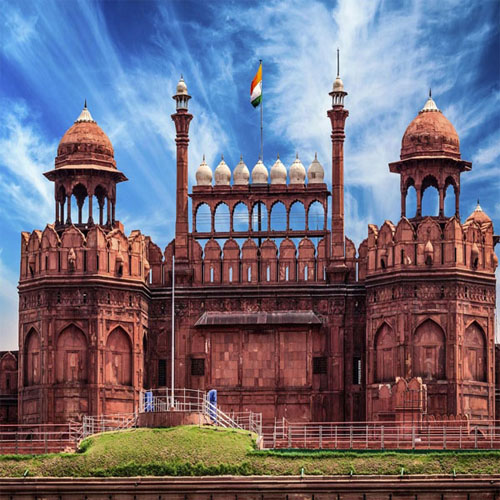
It is one of Delhi's top tourist sights. A brilliant red sandstone fort built by the Mughal Emperor Shah Jahan (who also built Agra's Taj Mahal) as his ruling palace. Completed in 1648, the years since have not treated the buildings kindly: the rooms have long since been stripped of all objects, the marble inlays are long gone and quite a few buildings are off limits. Still, the scale remains imposing and the gardens are kept lush and green even in midwinter. Major buildings within include: . .
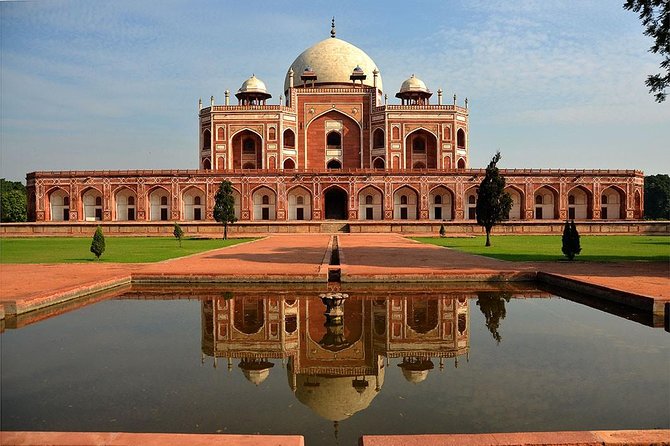
It is in south Delhi, near Hazrat Nizamuddin station, is one of Delhi's three UNESCO World Heritage Sites. The tomb is in large, immaculately maintained gardens in the Persian Char Bagh (four corners) style that were thoroughly renovated in 2003 with the Aga Khan's help and are consequently probably the best in Delhi. As you enter the complex, the first major structure on your right is the bulbous, octagonal tomb of Iza Khan, a court noble who built it in his own lifetime, some 20 years before Humayun's tomb. As you pass through the first gate, you will glimpse the dome of the tomb and enter a floral path leading to the second (West) gate, which now acts as the entrance to the giant central garden.
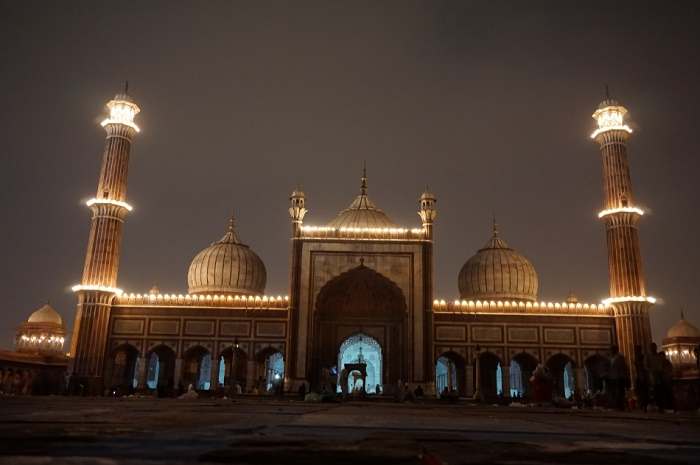
Opposite the Red fort, next to Chandni Chowk in Old Delhi (Metro: Chawri Bazaar) – The largest mosque in India and a must-see while in Delhi. You can climb to the top of the minaret. The climb is steep, dark and somewhat claustrophobic, but you'll get great views over the complex and the city. You'll need to cover up your shoulders and legs (scarves and lungis available for rental), and take off your shoes .
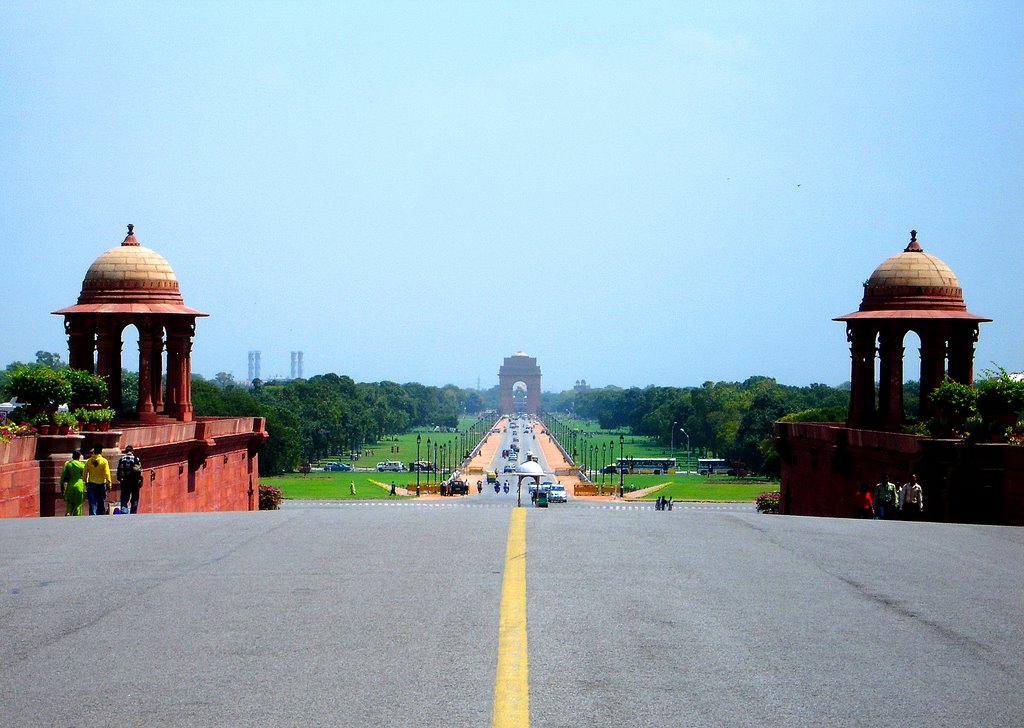
This is a main parade route that leads from Rashtrapati Bhavan (the President's residence) to India Gate, with many grassy lawns along the way. Especially nice in the evenings and at night when the buildings are lit and the vendors come out to supply the many picnicking families.
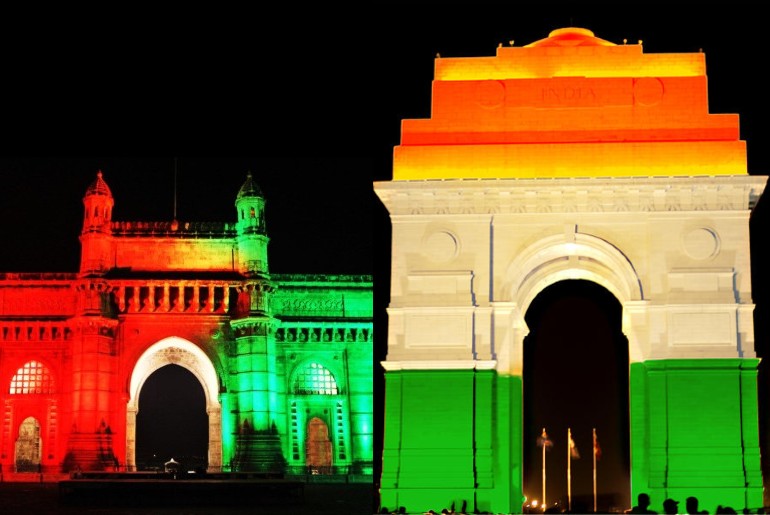
This monument has been built as a memorial for the Indian soldiers who died in World War I. There is also a fire ("eternal flame") burning for all fallen Indian soldiers. .

Take a walk at Connaught Place (CP), the heart of New Delhi. It is now called Rajiv Chowk. The British-designed colonial equivalent of a shopping mall, it's laid out in two concentric rings divided into blocks, all bursting with shops and lots of pampered pigeons waddling about. Long neglected, the area received a major shot in the arm after the opening of the major Metro junction of Rajiv Chowk under it, and it's going more upmarket by the day. At the center is a small but pleasant park, while on one edge is the notorious Palika Bazaar, an underground den of cheap wares, many pirated or smuggled from overseas. The area is surrounded by tall office buildings on nearly all sides.
(Kindly note, on Day tour you can visit only above-mentioned monuments and for below mentioned monuments visit you need one day more..
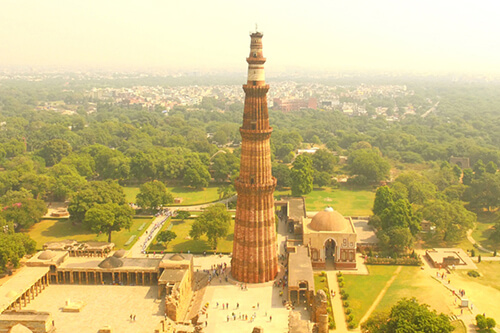
The most famous structure on grounds, this 72.5m minaret was the tallest "skyscraper" in the world when built (1193-1368) - it was constructed on the orders of Qutb-ud-din Aybak. Delicately carved, it has been astonishingly well-preserved and is still an awe-inspiring sight today. .
The most famous structure on grounds, this 72.5m minaret was the tallest "skyscraper" in the world when built (1193-1368) - it was constructed on the orders of Qutb-ud-din Aybak. Delicately carved, it has been astonishingly well-preserved and is still an awe-inspiring sight today. .